
Tendrils Ten with David Anson Lee
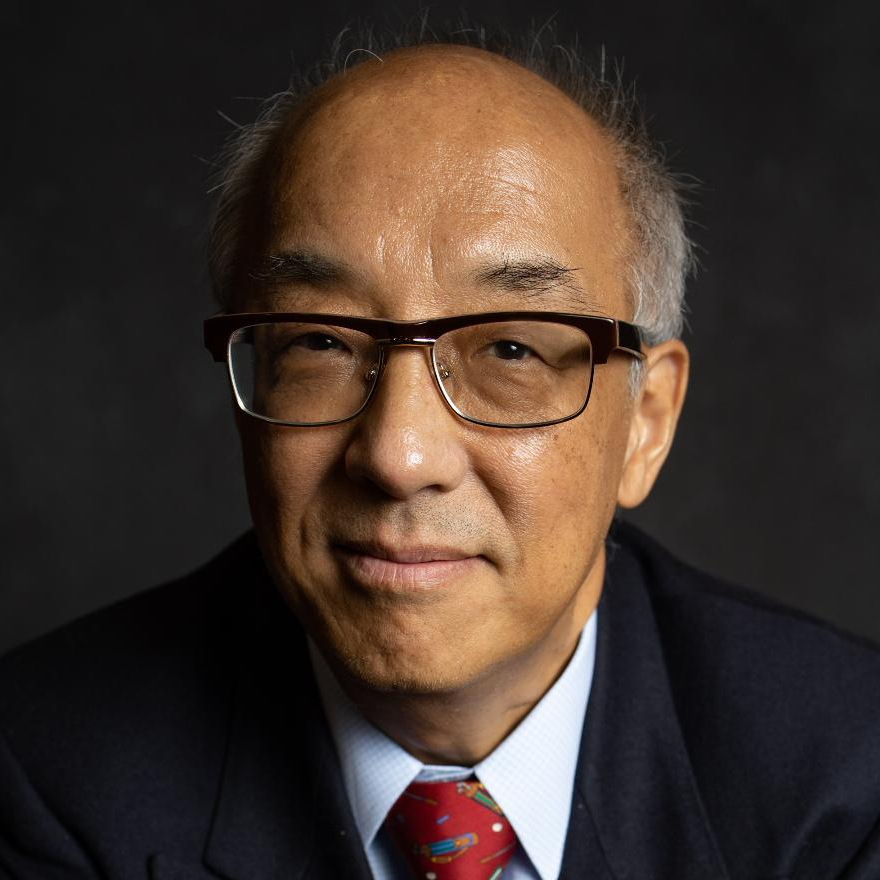
David Anson Lee’s work appears in Trauma and the Environment, Issue 2
What brings you joy? It could be recent or something you’ve enjoyed for ages.
Reading. I still love the feeling of opening a book and entering a mind completely different from my own. I also find great joy in the small, ordinary things: walking outdoors, watching birds, sharing a meal with family and friends, and discovering a sentence or image that makes me stop and read it twice.
What art form would you like to try at least once?
I would love to try sculpture. As a physician, I spent much of my life working with the three-dimensional realities of the human body, and as a poet, I work primarily with words. Sculpture seems like an intriguing place between the two: making something that can be touched, entered, and seen from more than one direction.
When was the first time you thought of yourself as a writer?
Probably much later than I should have. I was a physician long before I thought of myself as a writer. I had always read widely and written privately, but eventually I realized that writing poems was not simply something I did. It was a way I made sense of what I had seen, lost, remembered, and wondered about. That realization came with retirement, when there was finally enough silence to hear the poems.
What’s one way you process or manage painful emotions?
I write toward them rather than about them. A poem can give an emotion a physical object: a window, a bird, a hospital corridor, a stone, a cup of tea; and once the feeling has somewhere to live outside me, I can look at it differently. Sometimes the poem doesn't solve anything. It simply makes the pain more bearable to carry.What’s a work of literature that has influenced you greatly?
T. S. Eliot’s The Waste Land has stayed with me for decades. I admire the way Eliot allows fragments, voices, places, myths, memories, and languages to coexist without forcing them into a single explanation. The poem taught me that fracture itself can become a form of structure, and that beauty can emerge from ruins without pretending the ruins aren't there.What’s your favorite tool for writing?
A pen and a notebook. I like writing by hand because the page slows me down. A handwritten line can be crossed out, circled, moved, or rescued from the margin. The imperfection of the page often leads somewhere the keyboard would not.If you weren’t a writer, what would you be?
I would probably still be a physician, or perhaps a teacher. Medicine and poetry may seem like very different occupations, but both begin with attention. Both ask you to look closely at something another person might overlook and to listen for what has not yet been said.If you could instantly master any skill, what would you choose?
I would choose to play the piano beautifully. I love the idea of being able to sit down and make something that exists only for the moment it is played. Poetry has taught me to listen closely to language; music would let me work with silence and sound in another way.If your workspace could talk, what would it say about you?
It would probably say, “He keeps too many books and papers open at once.” There are notebooks, marked-up manuscripts, books of poetry, medical texts, scraps of paper, and half-finished ideas everywhere. It is less a workspace than a visible record of curiosity, and perhaps a mild inability to decide which question to pursue next.If you could chat with one writer, living or dead, who would you choose?
I would choose Jorge Luis Borges. I would want to talk with him about time, memory, labyrinths, blindness, libraries, and the strange relationship between what we see and what we imagine. I suspect I would arrive with many questions and leave with even more.
David Anson Lee is a physician, philosopher, and poet whose work explores perception, memory, medicine, aging, identity, and the altered body. His poetry has appeared in numerous literary journals and has received recognition from publications and competitions in the United States and abroad. He is the author of a forthcoming chapbook: The Body Keeps Its Inventory in Shadow.
Visit https://davidalee.substack.com/ for more of his writing.